Maintaining your WordPress website is not as hard as it seems — just follow this simple maintenance checklist we’ve prepared for you. We’ve outlined six essential tasks that you should perform regularly to keep your WordPress site running smoothly.
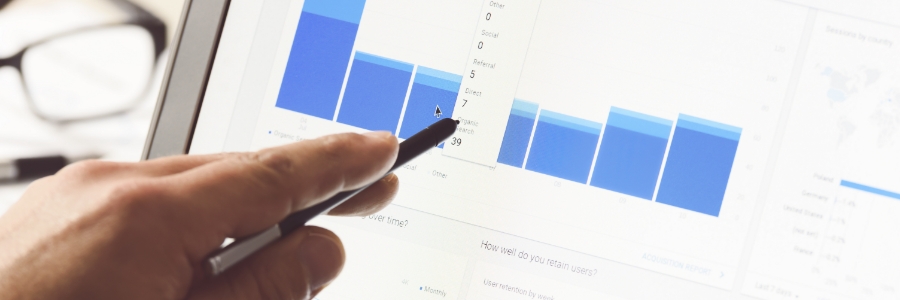
Data dashboards have become increasingly popular for businesses. These data visualization tools give you an overview of how your business is performing, and they cater to a wide variety of users, from marketing staff to project managers. Let’s take a look at how dashboards can support your business activities.
Though fileless malware has been around much longer, it only became a mainstream method of cyberattack in 2017. With fileless malware, cybercriminals are able to use legitimate tools and services, such as existing software, applications, and authorized protocols, to carry out malicious activities like unauthorized data retrieval or data damage.
When purchasing computers for your small business, one of the biggest decisions you’ll have to make is whether to get desktops or laptops. The choice ultimately depends on five factors, which we’ve outlined for you below.
Portability
The COVID-19 pandemic has driven most businesses to adopt remote work and hybrid work setups.
Each of the original types of cloud infrastructure — public and private — comes with their own sets of pros and cons. Fortunately for resource-strapped small- and medium-sized businesses (SMBs), they don’t need to conduct trial and error to see which one is best for them — they can simply reach a happy medium with the hybrid cloud.
For years, big companies have been harnessing the power of business intelligence (BI) to improve business performance. And for them, paying experts to analyze large data sets is no issue. It’s different with small- and medium-sized businesses (SMBs). SMBs also store large volumes of data, but many SMB owners are wary of spending too much on BI. Fortunately, there are plenty of budget-friendly BI tools and resources available for your SMB nowadays.
Every technology you use — whether it’s a cloud-based program, a mobile application, or on-premises servers — contains sensitive business data vital to conducting operations. So how can you ensure the security of such data from cyberthreats like identity theft, phishing attacks, and other forms of fraud? Identity and access management (IAM) is the answer to this.